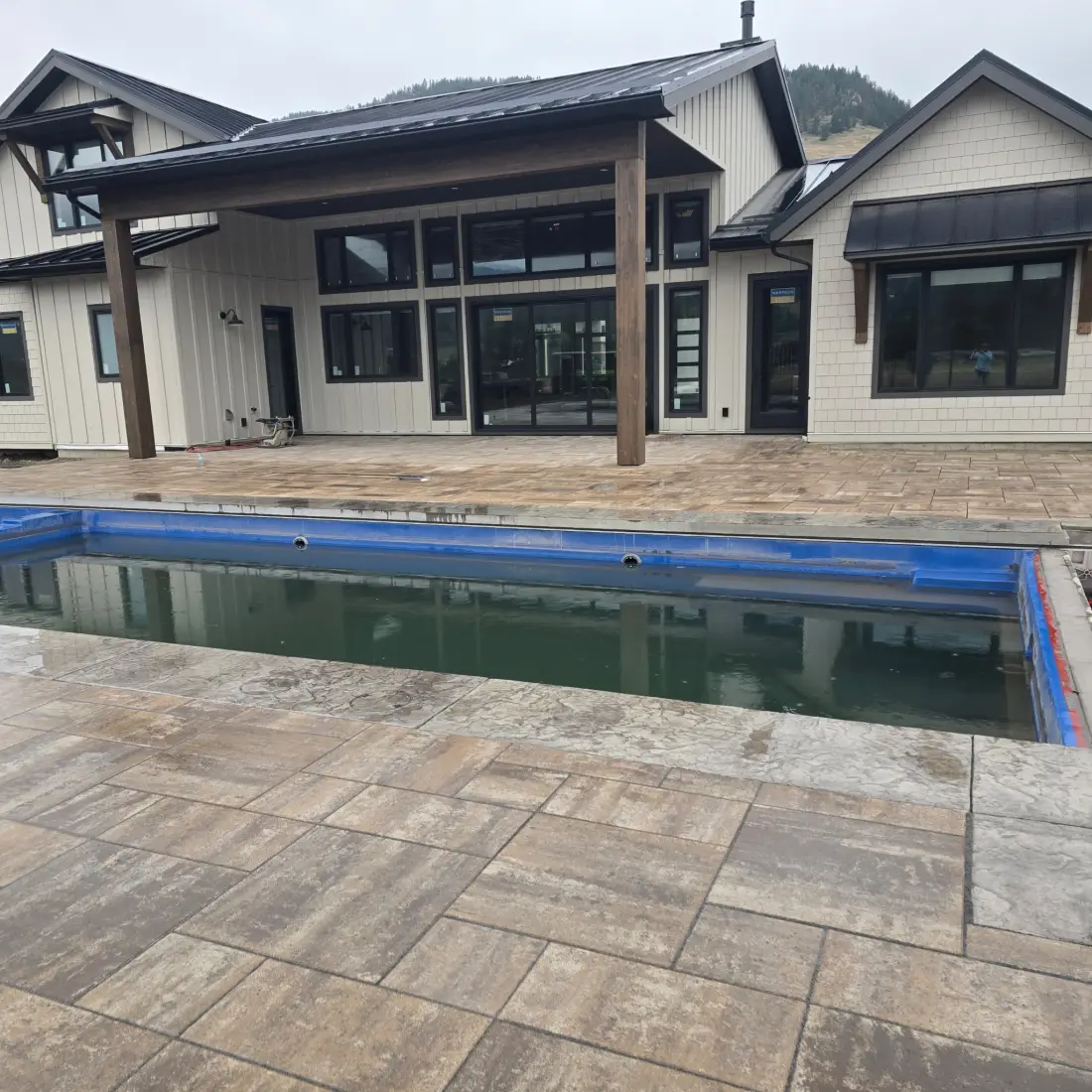
Patios, pool decks, paths and steps laid on a properly built, properly sloped base, so they stay flat through Shuswap winters.
Send a photo of the space. We'll tell you what it needs.
Everything Earth builds paver patios, walkways, pool decks and steps across Salmon Arm, Blind Bay, Eagle Bay, Sicamous and the wider Shuswap. A paver patio is only as good as what's under it: a compacted gravel base, a thin screeded sand bed and enough slope to shed water. Owner-led, fully insured, with a limited 500-day workmanship warranty.
Almost always because of the base, not the pavers. Interlocking pavers are strong. What fails is the ground under them: a base that was too thin, never properly compacted, or built flat so water sits in it. In a freeze-thaw climate like the Shuswap, water trapped under a patio freezes, expands and lifts it, then lets it drop again in spring.
The industry guidance is a compacted gravel base of at least 4 in. (100 mm) under patios and walkways on well-drained soil, and at least 6 in. (150 mm) under a residential driveway. In colder climates, or on wet or weak soil, the base needs to be thicker than that.
Gravel is spread and compacted in lifts of a few inches at a time with a plate compactor. Dumping the whole depth in and running a compactor over the top leaves it loose underneath, and loose gravel settles.
The surface is pitched at least 1.5% so it drains, edge restraints stop the pavers creeping outward, and the sand bed is screeded to about 1 in. It's a levelling course, never a fix for a lumpy base.
That's the part of a patio you never see once it's finished, which is exactly why it's the part that gets cut. Solid base prep and clean edges are what we build every patio and walkway around, because they're what keep it flat long after the first winter.
Every site is different. Soil, drainage and what the patio will carry decide the build, which is why we look at the ground before we give you a number.
Every photo here is our own work in the Shuswap.
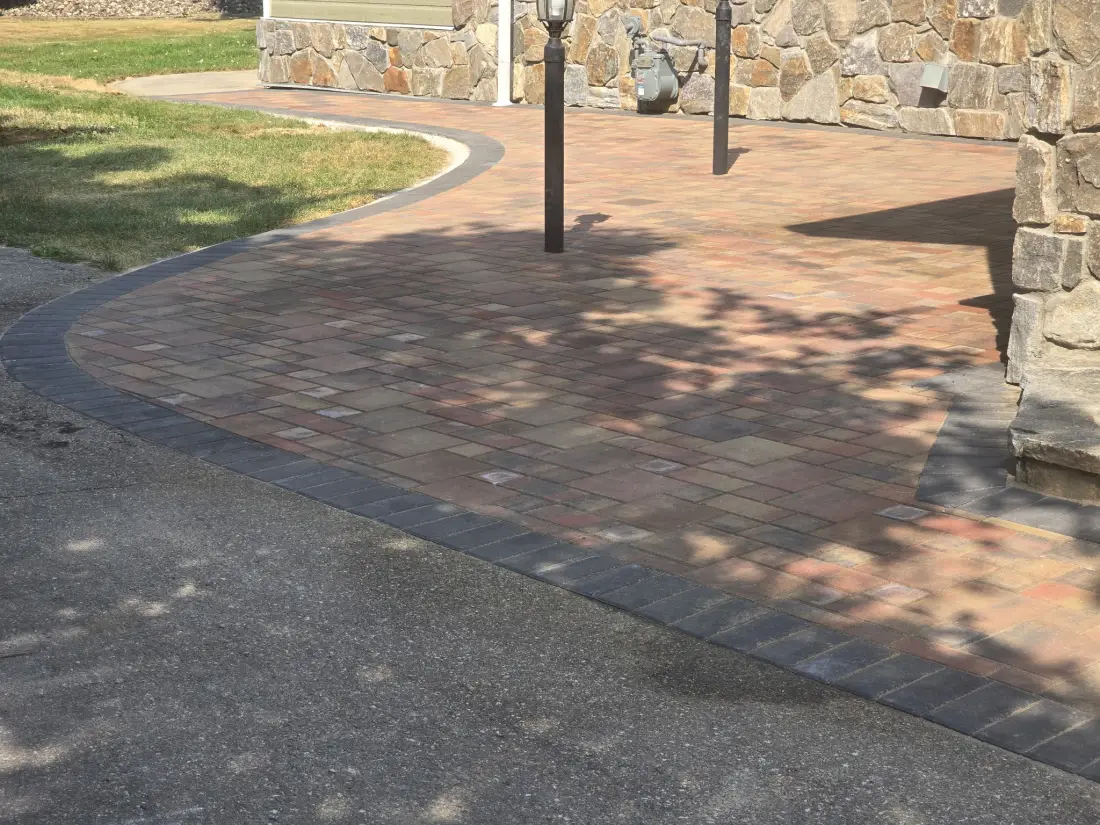
Laid to a clean curve with a darker soldier-course border to frame it.
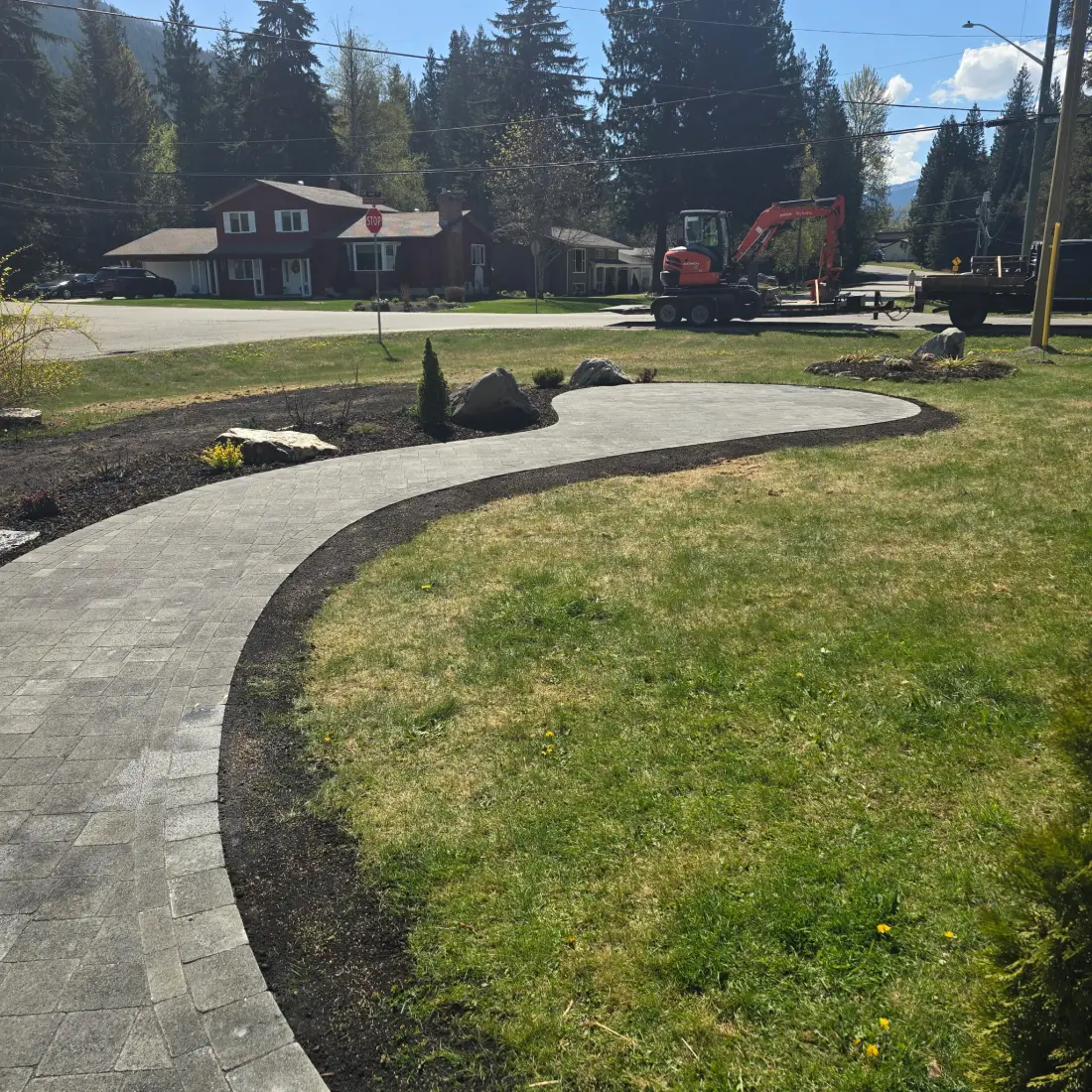
A sweeping path from the driveway through a new lawn.
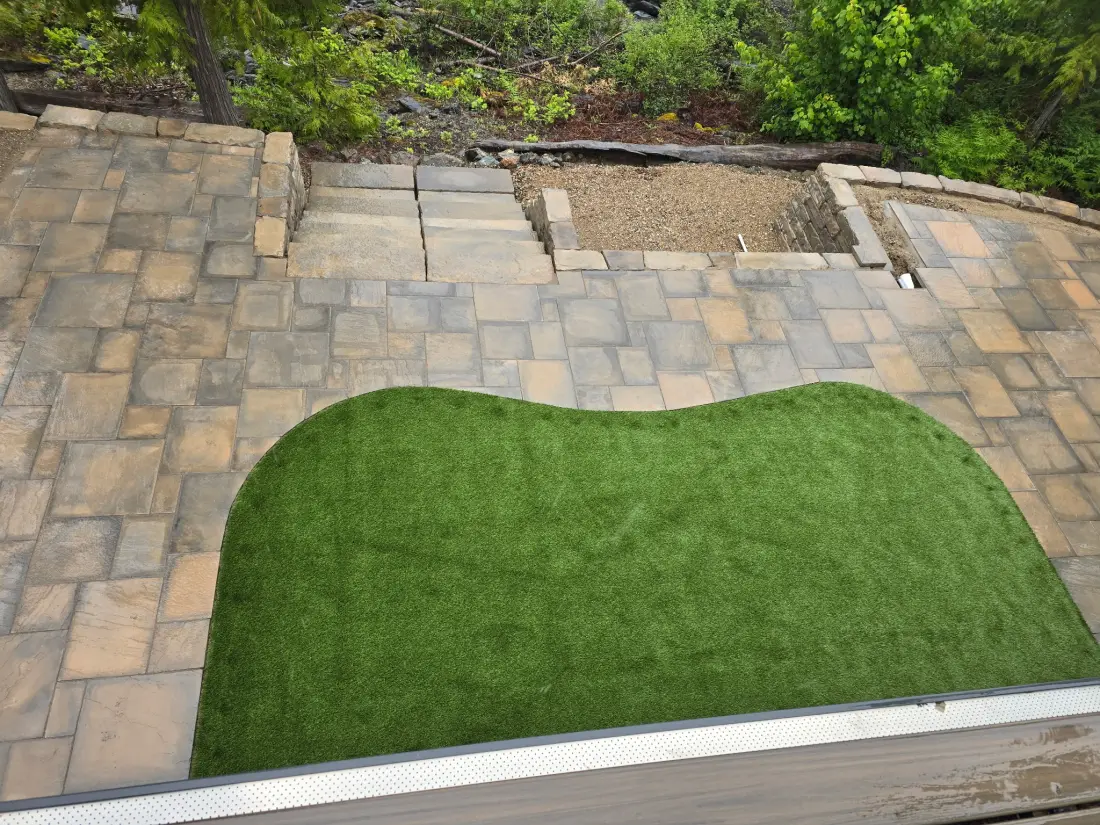
A low-maintenance patio with a curved inset of artificial turf.
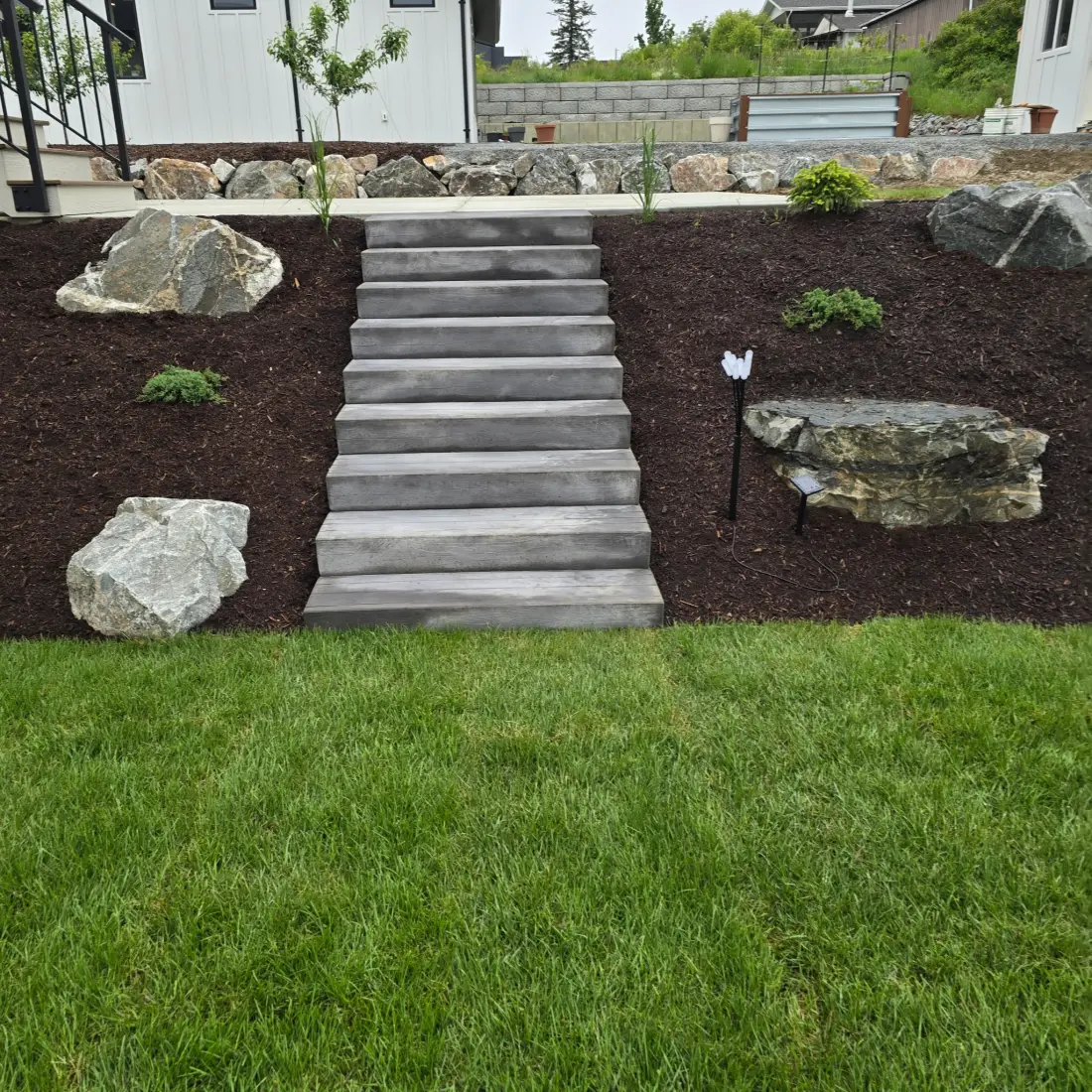
Wide slab steps set into the grade, with boulders placed alongside.
"Steve built a paver pathway and fire pit patio for us and it couldn't have turned out better. His imagination and creativity really shines in his work."
"An overgrown back yard with a sketchy deck became a beautiful paver patio with low-maintenance turf and rock pathways. My only regret is that I didn't get them here sooner."
"A weed-infested mud yard was transformed into an incredibly beautiful yard — cedars, rockwork, a flower garden, grass and a water rock fountain with a paver patio. Very, very fantastic work."
Industry guidance from the Concrete Masonry & Hardscapes Association is a compacted gravel base of at least 4 in. (100 mm) for patios and walkways on well-drained soil, and at least 6 in. (150 mm) for a residential driveway. Colder climates and wet or weak soils need a thicker base. We size the base to your ground after we've seen it.
Usually the base. It was too thin, not compacted in layers, or built without enough slope, so water got under it and the freeze-thaw cycle moved it. Pavers can be lifted and relaid on a proper base, so it's often a rebuild of what's underneath rather than all-new stone.
Not properly. The same industry guidance says base material shouldn't be placed when it's frozen or over frozen ground. Paver work here is a spring-to-fall job, so the off-season is a good time to get a quote in for next year.
Yes. Walkways, slab and paver steps, pool decks and patios, often tied into a retaining wall or rockwork on the same job.
Yes. We stand behind our workmanship with a limited 500-day warranty.
We'll tell you what it needs, what it costs, and when we could start.